

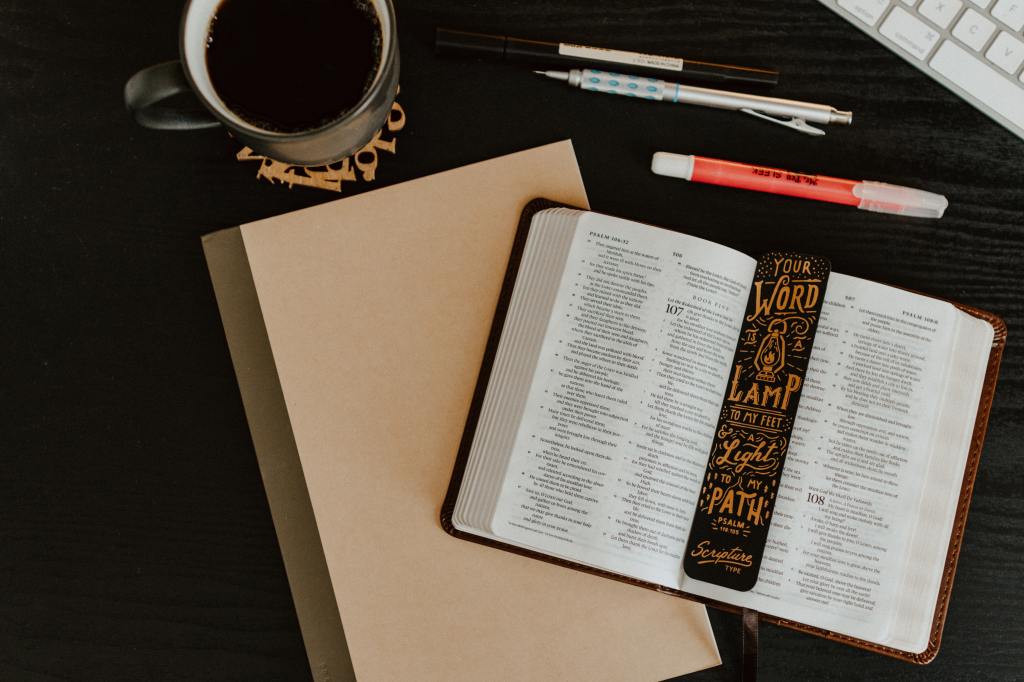
This post is for new Christians who are wondering how to study the Bible but are having a hard time doing it, either because they have no time to do it or find it challenging to understand it.
What I am going to share is my way of doing Bible Studies. Some have another way — or should I say resources — like using a Bible dictionary, a concordance, and atlas — for a deeper understanding of the Bible. Don’t worry, I’ve made mine pretty simple.
But before I go on and share how to study the Bible on your own, let me clarify a few things first.
Bible Study and Devotional are Two Different Things
I’d like to clarify this first after a friend kept on asking how to do their devotional time (but was referring to studying the Bible).
We often interchange a Bible Study with a Devotional (and I’m guilty of this). The thing is, these two are connected but not the same. I got to have more clarity about this recently despite the fact I’ve been a Christian for almost ten years (so no need to worry if you’ve mixed this up too). I mixed it up since I was also writing my devotional content when I was just starting my Christian journey. Of course, this is after I study a chapter in the Bible.
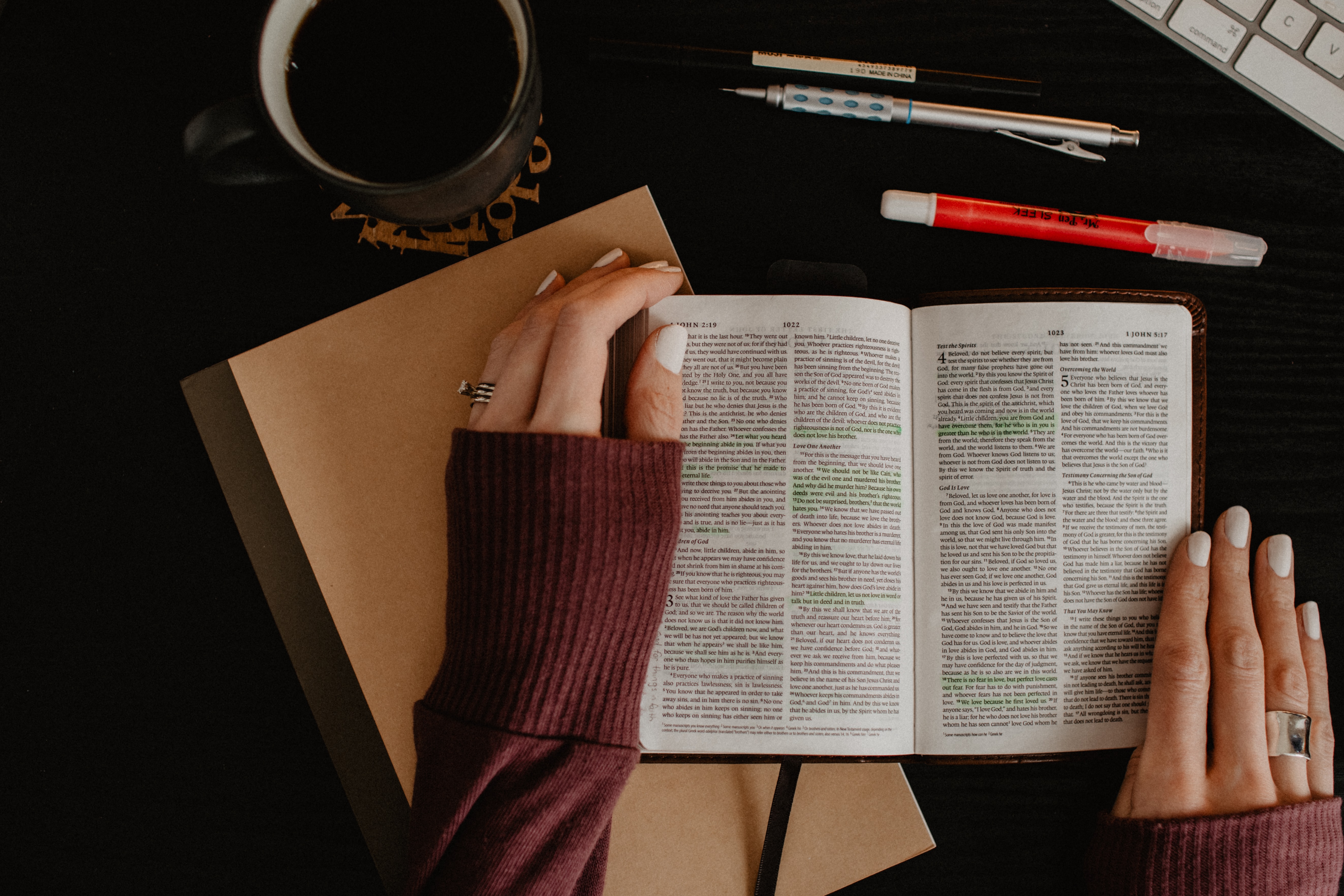
A Bible study is understanding the books included in the Bible. Remember that a Bible is not a book but a library — a collection of books written by different people and inspired by God. It’s composed of history, biographies, prophecies, poetry (by personalities like King David and King Solomon), and letters (written by Paul).
Studying the books in the Bible is like studying any other book. You read it, cross refer the events and dates with other books (mostly other books in the Bible too), understand the situation at that time, and take notes of important items. However, the only difference is you also get to learn about God’s character and relate the lessons to your current situation (and I mean what you are experiencing now).
How does it differ from a Devotional?
A Devotional is a book of reflections created by Christians from their own Bible studies. You can find a lot of Devotional books — from 30-day devotionals to 365-day devotionals. It’s a daily light reading presenting a verse for that day and the reflection centered on that verse. This was how I started my own devotional. I’d read a chapter, take note of a verse that has an impact on that day, and write my reflection.

You can do a daily devotional study. Many Devotional books present a central topic with guide questions after each chapter for your reflection.
Now that I’ve cleared that up at least (and I hope you get a clearer understanding) here’s the main content.
How to study the Bible
Please remember that what I’ll be sharing is my recent way of doing Bible study…
1. Commit to reading daily (even if you don’t understand it at first)
When I first started studying the Bible, I just read it even if I can’t understand anything. It was a firm decision to open and start reading. Eventually, I understood the content as I read it more. That’s the beauty of reading the Bible. All books are connected you eventually understand the previous books you’ve read.
You don’t have to write anything yet, although it does help to write down verses that seem to grab your attention as you read. In my case, I started highlighting instead.
2. Find a Bible that somehow “speaks” to you
Having the Bible version that fits me helped a lot. You can start with Bible versions that can help you understand the meaning presented by the authors. I started with NIV (New International Version) and the NASV (New American Standard version). Other Bible versions that helped too were ESV (English Standard Version), NLT (New Living Translation), and the Amplified version.
You can understand more about the different versions of the Bible here
If you’re more confident to go deeper, try NKJV (New King James Version) or KJV (King James Version).
You can shop for a Bible online. These usually cost from 100 Pesos to 2,000 Pesos (here in the Philippines). But, if you want to be sure what Bible version works for you before you buy one, download Bible apps like the YouVersion app.
YouVersion has a daily verse, and a selection of Bible versions with audio readings (if you’re an auditory learner), and Devotional plans. Try to check which one suits you best.
3. Pray before you start
Prayer is your way to communicate with God. It’s not a “wishing” moment like how many misunderstood it, but an act of humility. It’s aligning oneself with God’s will (you’ll get this as you go through your journey don’t worry).
When you pray, ask for guidance and wisdom on what God wanted to reveal to you as you read His Word (Yes, the Bible). Pray to have a deeper understanding of God’s character and to mold you to be obedient to His perfect Will. After all, reading the Bible is the best way God communicates with you.
(A prayer is our act of communicating to God. The Word is God’s way of communicating to us.)
4. Study a book’s background
When reading the Bible, you must first understand the book’s background. The Bible has many books from the Old Testament to the New Testament, and all of these are very connected. How to start this?
Write down who the author of that book is. Next, find out what was the situation then and who the book is addressing. You can find several references on the internet. I must warn you, just be careful in selecting your resource.
In my case, I started by looking over what the book is all about on the internet. Recently, I’ve been fond of The Bible Project. They have animated videos that provide an overview of a book in the Bible. Watching their videos before studying has recently helped me grasp what the book is and how I should approach it (how many chapters I should read for the day or a week and what to look out for).

If you want to try the Bible Project, you can watch their videos on YouTube, on Instagram, and the YouVersion app.
Another resource that has been a big help (and got me hooked to researching a book’s background) is InspirAgain.org.
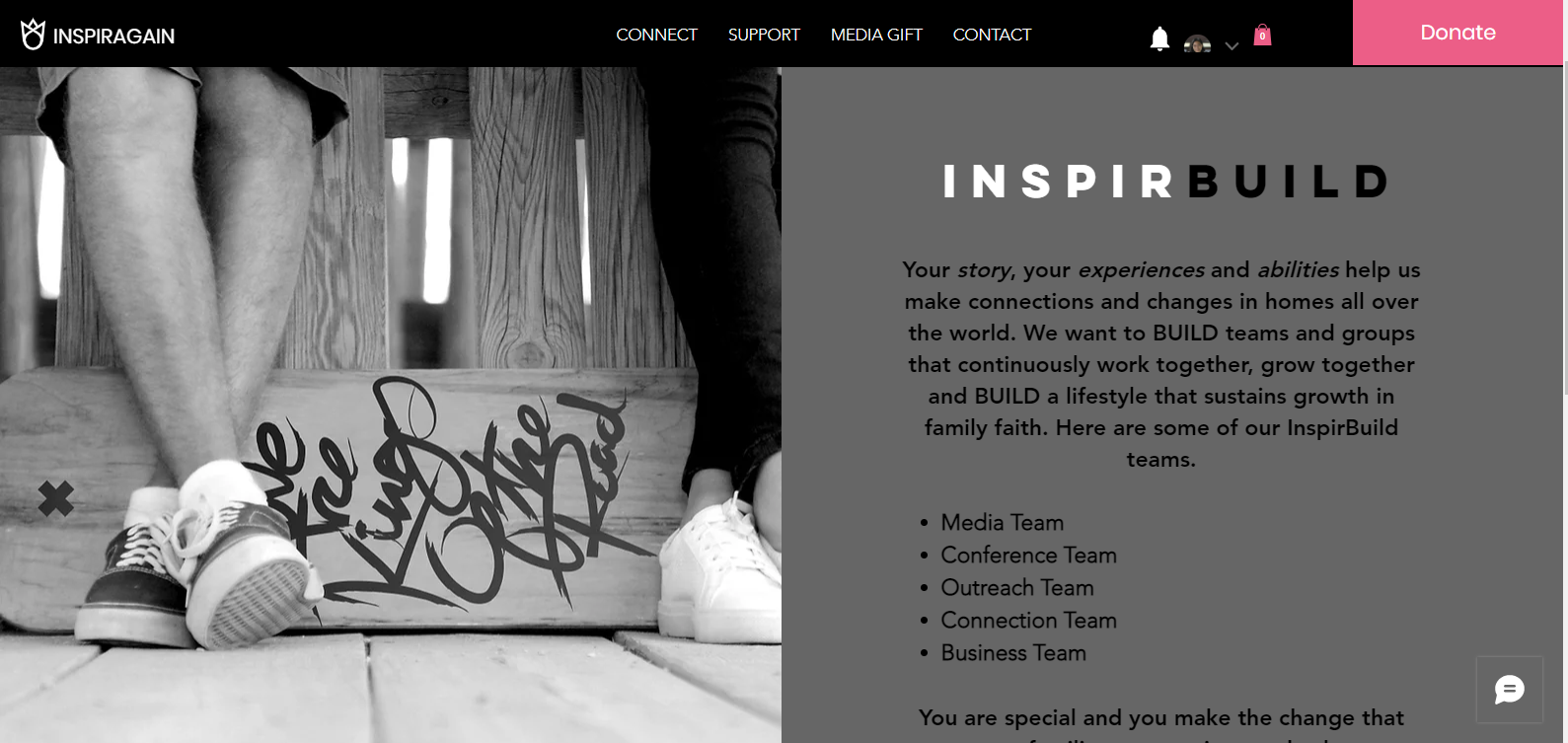
They have an RNM library of Christian resources, including video Devotionals. They also have The Bible Project videos. Using these resources helped me focus on Bible studies — avoiding other social media content distractions.
5. Keep notes
There might be verses that have hit you on the spot, given you an “aha” moment, or may have comforted you. Write this verse down. Write down some important facts, what the author is trying to say, the instructions mentioned, and your thoughts about these.
6. Reflect
As you read your Bible, what thoughts, reminders, or realizations came to you and why?
The beauty of reading the Bible is that it always has something new to reveal regardless of how many times you have read a passage. Write down your reflections and realizations.
7. Write down your action points

It never fails — reading your Bible will challenge you to change your perspective, start a new habit (or lifestyle), which eventually develops your character.
Write down what you believe God is trying to tell you. Some even challenge themselves with a timeline like “within this week, I will call five friends and pray for them” or “This week, I’ll approach at least two strangers and share to tell them Jesus’ love for them”.
8. Pray in thanksgiving
Ending the Bible study in prayer is again an act of humility. You are humbling yourself in the presence of God and thanking Him for the wisdom and the revelations He gave you through the Bible. Remember that everything you read there has been breathed and inspired by God.
How about going through a Devotional?
As I’ve said earlier, a devotional is different from a Bible Study. If you say you’ll be going through a devotional, it means you’ll be reading a Devotional book as your guide in understanding the Word (verse) shared there.
If you’re a new Christian, I suggest The Purpose Driven Life book by Rick Warren. I started with that one.
There’s also My Utmost for His Highest by Oswald Chambers. There are many great Christian authors out there, however, I encourage you to still read the Bible even if you are going through a Devotional. Remember that these are their reflections (not yours). It’s still different to read the whole book instead of skipping some verses. It gives you the whole intention of a verse.
That’s it!
I hope this guide helps. Take your Bible journey one day at a time. It took me years to really get a better grasp of the Bible — and to be honest, I still am. Don’t be too hard on yourself, especially if you’re new to this. I highly recommend you connect to a local church or a Christian friend to mentor you for more guidance.
Deciding to be a Christian is easy. You can accept Christ as your Lord and Saviour and just say you are one — however, living as a Christian requires you to build your relationship with Christ and obey His commandments day in and out. It’s hard work and it requires a lot of letting go of your old life and daily deciding to live anew today — and yes, it starts by reading the Bible to know how you can do this.
Before I end this post, a special thanks to InpirAgain for the RNM gift. I’m forwarding this to you too, dear reader. Please also pray and support their ministry as they help families grow in their faith and empower them through Christ.
Thank you for taking the time to read this lengthy post. Remember that
to be a Christian is to love and obey His Word, for it is God breathing life into you.
God bless your journey!
 Chasing Possibilities
Leave a comment